
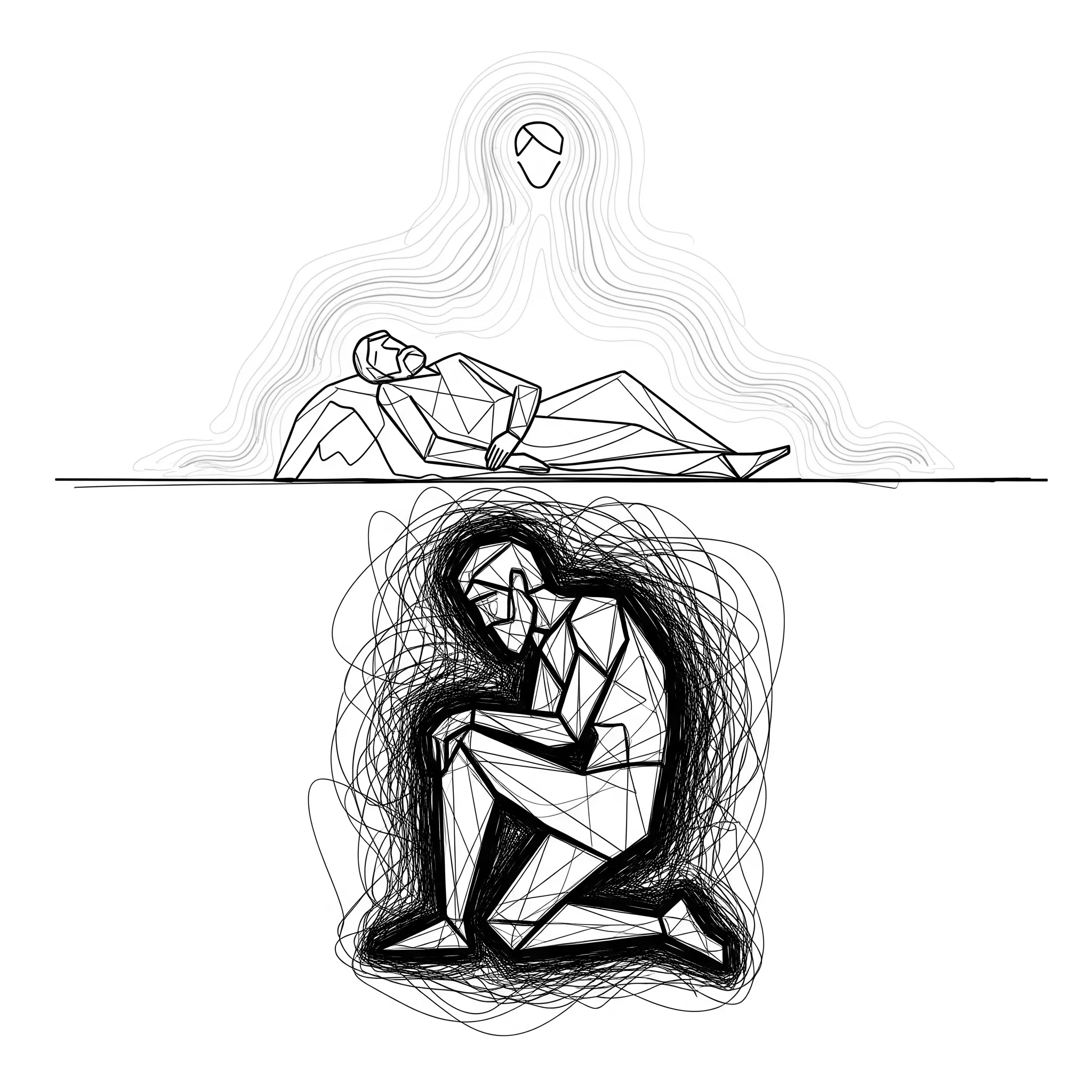
In Neville Goddard’s teaching, Scripture is not history but a psychological drama describing the movement of consciousness. Every character represents a state of mind, and every outcome reveals the law of assumption at work. The parable of Lazarus and the Rich Man is a clear illustration of how inner fixation and inner neglect shape lived experience.
The Story in Simple Terms
In Luke 16:19–31, Lazarus is a poor man ignored at the gate of a rich man who lives in comfort and excess. After death, Lazarus rests in peace “in Abraham’s bosom,” while the rich man finds himself in torment, unable to cross the great divide between them.
The Law of Assumption at Work
In Neville’s revelation, this is not about reward or punishment after death. It describes what happens within the mind when certain assumptions are habitually occupied.
Lazarus represents the neglected self within consciousness. He symbolises the quiet, imaginative, feeling nature of the self—the inner life that senses meaning, peace, and fulfilment—but is left unattended. He lies at the gate because he is always near awareness, yet rarely acknowledged. His hunger reflects unmet inner feeling; his sores symbolise the discomfort created when imagination is ignored or denied expression.
The Rich Man represents a dominant state of mind fixated on external success. This is the aspect of consciousness that assumes value comes from achievement, comparison, status, and worldly gain. It believes fulfilment will arrive “once enough is accumulated” or “once I am better than others.” Though rich in appearances, this state is inwardly empty because it draws life from externals rather than from imagination.
Why the Rich Man Suffers
The rich man’s torment is not punishment—it is the natural condition of a mind that has assumed separation from its inner source. By identifying solely with outer success, the rich-man state starves the imaginative self (Lazarus). When imagination is neglected, life becomes dry, anxious, and restless, no matter how successful it looks.
This is why the rich man cannot cross the chasm. The divide is mental, not moral. One cannot reach peace while remaining identified with assumptions rooted in lack, comparison, and external validation.
Lazarus and Abraham
Lazarus resting in Abraham’s bosom symbolises imagination returning to its rightful place of rest. Abraham represents faith—the underlying assumption that being itself is sufficient. When imagination is finally acknowledged and allowed to rest in this assumption, peace follows naturally.
The Brothers and the Refusal of Signs
The rich man asks that Lazarus be sent back to warn his brothers. This reflects the mind’s belief that external evidence will cause inner change. Abraham’s refusal reveals a core principle of the law of assumption: no outer sign can transform consciousness if assumptions remain unchanged. Change must occur internally first.
If the assumptions that govern awareness do not shift, no miracle, proof, or persuasion will alter the lived experience.
The Central Teaching
This parable teaches that suffering and peace are consequences of inner identification.
- Lazarus is the imaginative self that is ignored when consciousness chases worldly measures of worth.
- The rich man is the assumption that fulfilment comes from externals.
- The chasm is the fixed belief separating awareness from its own source.
The Takeaway
Through the law of assumption, the parable reveals a simple truth: what we habitually identify with determines our state of being. When imagination is neglected, life feels impoverished regardless of success. When imagination is honoured and rested in faith, peace arises without effort.
The story does not warn against wealth—it warns against assuming that fulfilment lives anywhere other than within.