

New
 A New illustrative site featuring images based on Neville Goddard's Revelation of the Bible can be viewed at
hnnh.studio
A New illustrative site featuring images based on Neville Goddard's Revelation of the Bible can be viewed at
hnnh.studio

About This Site
Explore Neville Goddard’s teachings in a structured and accessible way, with direct references to the Bible, which itself reveals the Law of Assumption through its stories and symbolism.
When Neville spoke in his lectures, he always taught alongside the Bible because he was revealing what it had already shown—its psychological principles and processes. Today, many fail to recognise that the Bible is not just a reference but the very revelation Neville was making accessible.
Practical notes
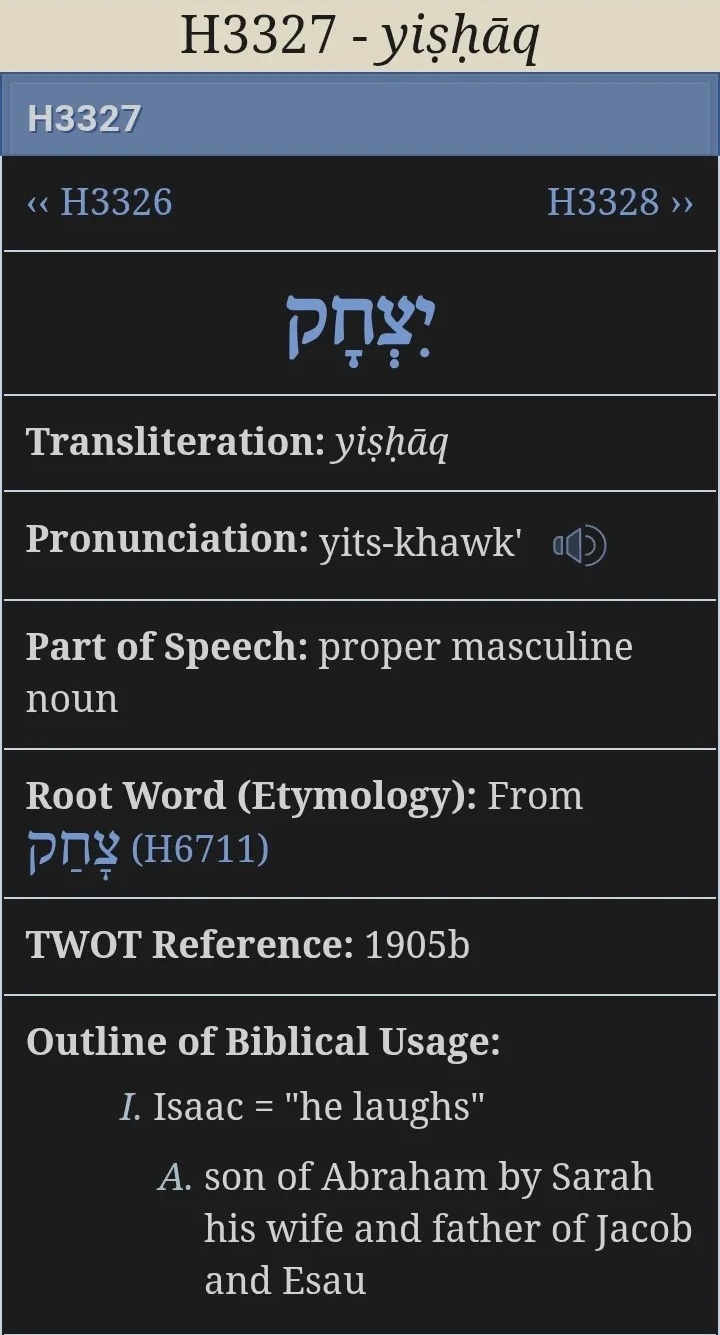
Clicking on Bible verse references within posts will open a pop-up showing the actual Bible passage from Blue Letter Bible. Hebrew name meanings can be found using tool apps like Blue Letter Bible, which also provide many translations and interlinear insights.
About The Writer
I was brought up Christian and attended Sunday school and youth club, but I never connected with the doctrine. It was presented in a way that felt distant and external — heavy on rules, guilt, and ritual, and light on anything practical or inward. I always felt there had to be more to the Bible than what I was being taught.
That confusion stayed with me into adulthood. The traditional interpretation framed God as separate, judging, and outside of me, which left little room for clarity or personal responsibility. Instead of empowerment, it created fear and a sense of limitation — as though truth existed somewhere beyond reach.
Later, when manifestation and consciousness-based teachings became more visible, my interest was renewed. I've explored a wide range of philosophies and systems over 40 years — Tarot, Eckhart Tolle, Wicca, Esther Hicks, Alchemy, Astrology, and others — and began to notice something consistent: much of their background symbolism, structure, and language ultimately come from the Bible. That realisation changed how I approached Scripture.
I also discovered Neville Goddard at this point. His insight that the Bible is psychological rather than historical was the first interpretation that made the text coherent. However, while Neville explained the overall pattern clearly, he rarely worked directly through individual verses. His language also continued to speak of “God” and “man” in a way that, particularly for those with religious backgrounds, can make it difficult to mentally dissolve the separation between the two.
This is where my work differs.
I returned to the Bible itself and read it carefully, without religious doctrine and without importing ideas from other systems. Using Neville’s framework as a foundation, I examined the text directly — sometimes line by line — to see whether the symbolism was consistent throughout. What became clear is that the Bible is internally cohesive, repetitive by design, and focused entirely on inner states rather than external events.
The difficulty was never the Bible — it was the habit of reading it outwardly. At first, this inward way of reading can feel unfamiliar and even difficult to settle into. But once the perspective clicks, the connections become clear and surprisingly direct. The text begins to reflect the way the mind actually works.
The characters are not people; they are states. The narratives describe how identity is assumed, how belief is impressed, and how the mind responds to what is asked, believed, and accepted as true. As these connections form, the reader can observe the same patterns operating within their own thinking.
Turning the focus inward is not always comfortable. Becoming aware of how you think, assume, and identify can bring a genuine sense of grief. There is often a period of letting go — of old beliefs, emotional habits, and identities that once felt necessary. In that sense, this work can be bittersweet: insight brings freedom, but it also requires honesty.
Seen this way, the Bible is not about worshipping an external God. It is about recognising awareness itself as the creative power — the capacity to assume and become. This distinction is made explicit throughout the site, particularly for readers who have struggled to separate imagination from inherited religious language.
The Way exists to make that clarity accessible.
This site documents what I have learnt through two years of studying Neville Goddard’s work and reading Scripture as a symbolic record of imagination in operation — a practical guide to conscious assumption and living from “I AM that I AM.”
The most striking realisation is that a book written thousands of years ago describes the mechanics of the human mind with remarkable accuracy. Its symbolism is not abstract or mystical — it is functional. When read correctly, it explains how perception forms, how identity stabilises, and how change actually occurs.
If you have sensed truth in the Bible but could not accept the way it was presented, that response is reasonable. The truth is there — but it is internal, precise, and far more practical than tradition allows.
Welcome to The Way.
To get in touch, please leave a comment below.